
Pavers & Concrete
Pavers and concrete in St. George
Patios, driveways, and walkways in paver or poured concrete, graded to drain and chosen to stay cool enough to walk on. Almost every hardscape failure here starts below the surface.
- BBB A+ Accredited
- Licensed & insured
- 4.9 on HomeAdvisor
- 20+ years local
Inferno Construction installs pavers and poured concrete across St. George and Southern Utah, including patios, driveways, walkways, pool decks, seat walls, and retaining walls. We compact and prepare the base properly and set slope for drainage first, because that is what determines whether hardscape stays flat through our temperature swings.
Why Inferno
Hardscape fails from the base up
Sunken pavers, a patio that ponds water in one corner, a driveway cracked across the middle. These almost never mean the material was wrong. They mean the base under it was not compacted properly, was not deep enough, or was never sloped to drain. Base preparation is invisible the day the job finishes and it is the single thing that decides whether the surface is still flat in five years.
Our temperature swings make that worse than in a mild climate. Ground that heats hard during the day and cools sharply overnight moves, and hardscape has to be built with room for it. On poured concrete that means control joints cut at the right spacing and depth so the slab cracks where we chose rather than randomly across the middle. On pavers it means proper edge restraint, because without it the field slowly spreads outward and the joints open up.
Then there is surface temperature, which people only think about after the first July. Color, thickness, and material change how hot a surface gets by a genuinely large margin. Dark dense pavers and plain gray concrete get punishing barefoot. Lighter, thicker units and travertine tones stay noticeably cooler, which matters most on pool decks and the paths people actually walk without shoes.

What's included
Base, surface, and drainage
Hardscape is excavation, base, and finish work in that order. We do all three, so nobody can blame the settling on somebody else's prep.
Paver patios
Interlocking and large-format pavers over a compacted base with proper edge restraint and joint sand.
Poured concrete
Slabs with control joints cut at the right spacing so cracking happens where we put it, not across the middle.
Driveways
Built to carry vehicle loads, which means a deeper base and thicker units or slab than a patio needs.
Pool decks
Cool-to-touch surfaces with slip resistance and slope carrying water away from the pool rather than into it.
Walkways & steps
Paths and steps with consistent risers, lit where they need it, and surfaces that stay walkable barefoot.
Seat & retaining walls
Block and stone walls with drainage behind them, engineered where the height calls for it.
Decorative finishes
Stamped, broom, and exposed aggregate concrete, plus banding and borders that break up a large field.
Grading & drainage
Slope, swales, and drains set before anything is poured, so monsoon runoff leaves rather than pools.
What goes into it
Anatomy of a paver
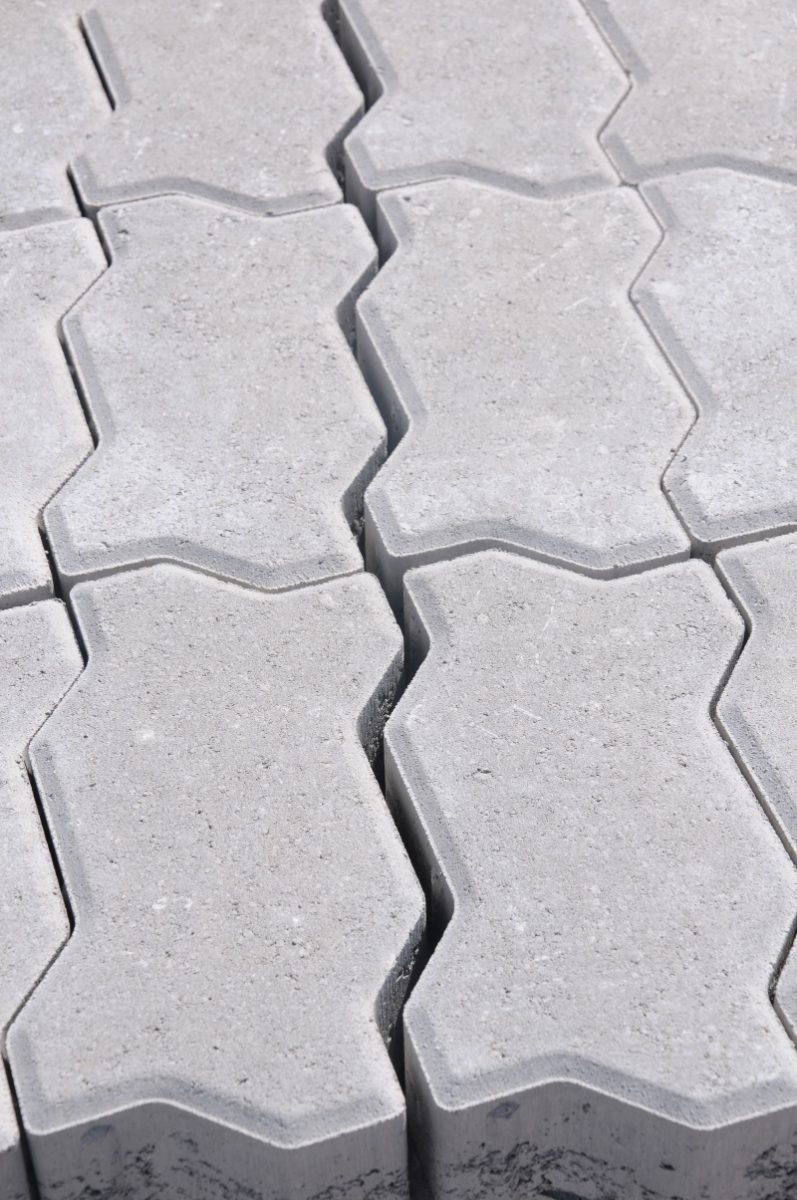
Why the unit itself matters as much as the pattern you pick. Tap a marker to see what each detail does. (Photo shown for illustration.)

Want hardscape that stays flat?
Free estimateHow it works
From excavation to finished surface
Free site walk
We look at grade, drainage, access, and how the area gets used, then talk through paver versus poured concrete.
Layout and selections
You get a layout, material and pattern selections, and a written scope. Permits pulled where the work needs them.
Excavate and compact
Excavation, base material placed in lifts and compacted, and slope set before any surface goes down.
Set and finish
Pavers laid, cut, restrained and sanded, or concrete poured, finished, and jointed. Then we clean and walk it with you.
Real reviews
Homeowners on working with us
Two decades of building across St. George, and a 4.9 rating to show for it. Here is what a few homeowners had to say.
Questions
Paver and concrete FAQs
Pavers or poured concrete?
Pavers flex with ground movement, can be lifted and reset if something settles or a utility needs access, and give you more color and pattern choice. Poured concrete is a faster install with fewer joints to maintain. For pool decks and patios we usually lean pavers here, largely because of how they handle our temperature swings.
Why did my old patio sink?
Almost always the base. Either it was not deep enough, was not compacted in proper lifts, or water was allowed to run under it and wash out the material. Relaying the same pavers over a properly built base usually fixes it permanently, and we can often reuse the original units.
Do pavers get too hot to walk on?
Some do. Dark, dense units get genuinely painful by July. Lighter colors, thicker units, and travertine tones run much cooler. We steer you toward those on pool decks and barefoot paths, and we place shade so the routes you use most are not baking all afternoon.
Will concrete crack?
All concrete cracks eventually. The job is to control where. Properly spaced and correctly cut control joints give the slab a planned place to relieve stress, so you get a straight line in a joint instead of a jagged crack across the middle. Anyone who promises crack-free concrete is overselling.
Do I need a permit for a patio or driveway?
Flat hardscape often does not, though setbacks, drainage, and impervious-surface rules still apply, and a driveway approach onto the street usually does need approval. Retaining walls above a certain height need engineering and a permit. We confirm all of it before we start.
Keep exploring